
MJR Vision MJR Vision Vision & controls
retrofits
Home

Products

Camera Matching & Barcode Verification Pharmaceutical Literature Inspection System Pharma Retrofit Tiers Inkjet Address & Print Add-On Norwix Marking Systems Integration Legacy Electronics & PLC Controls Retrofit

Company

Case Studies About Contact

Product 03 · Pharmaceutical literature

Barcode & Print Verification Retrofit for Existing Literature Folders

Three tiers that add barcode reading and print verification to a pharma literature folder line you already have installed — most to least capable.

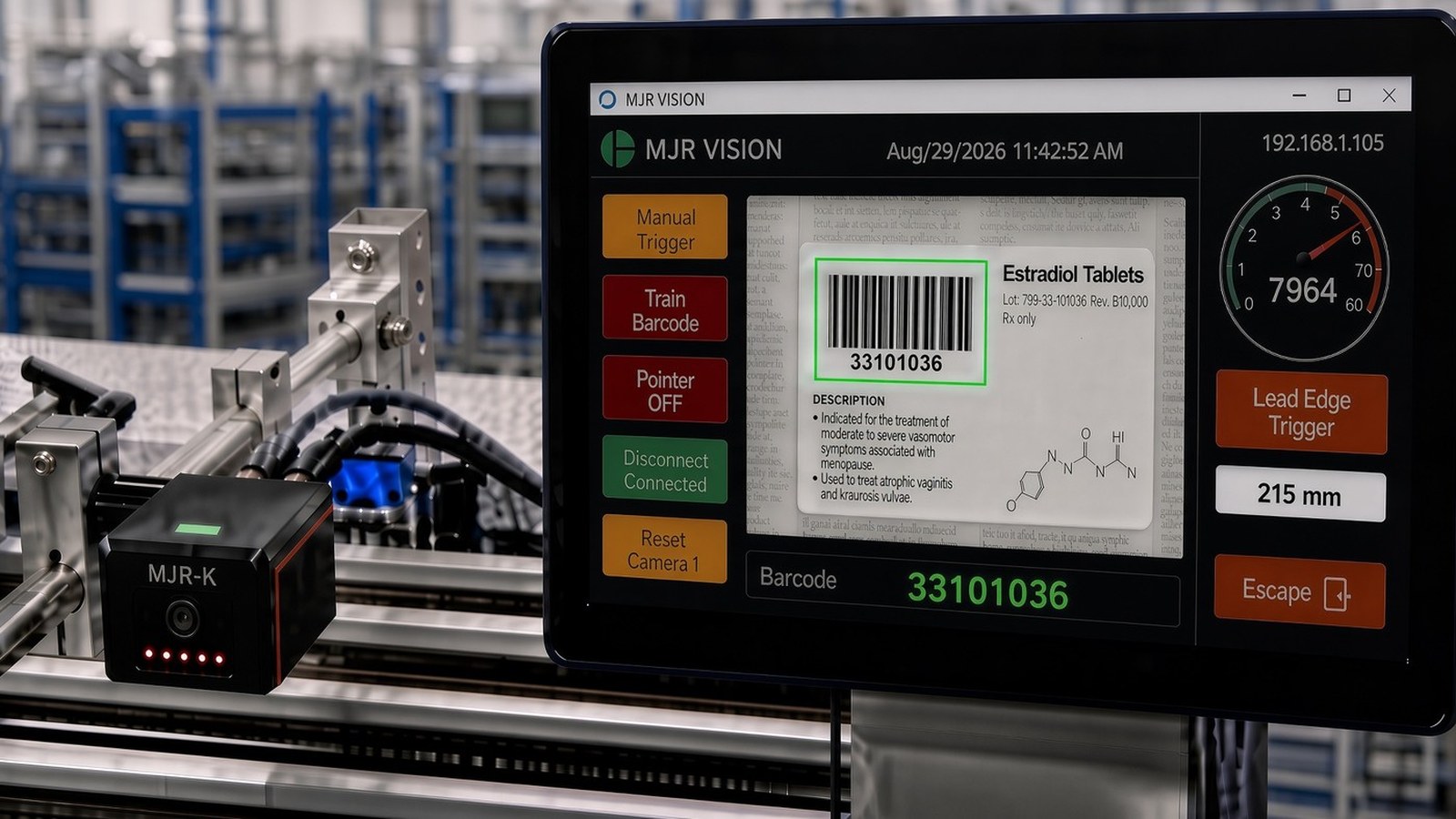
MJR HMI showing a live pharma leaflet barcode read on a retrofitted folder line. Zoom
MJR HMI showing a live pharma leaflet barcode read on a retrofitted folder line.

Choose a tier

Same goal, three price points.

Each tier reads the barcode on pharma leaflets and verifies print. They differ in capability, changeover speed, how much of your existing hardware is reused, and cost.

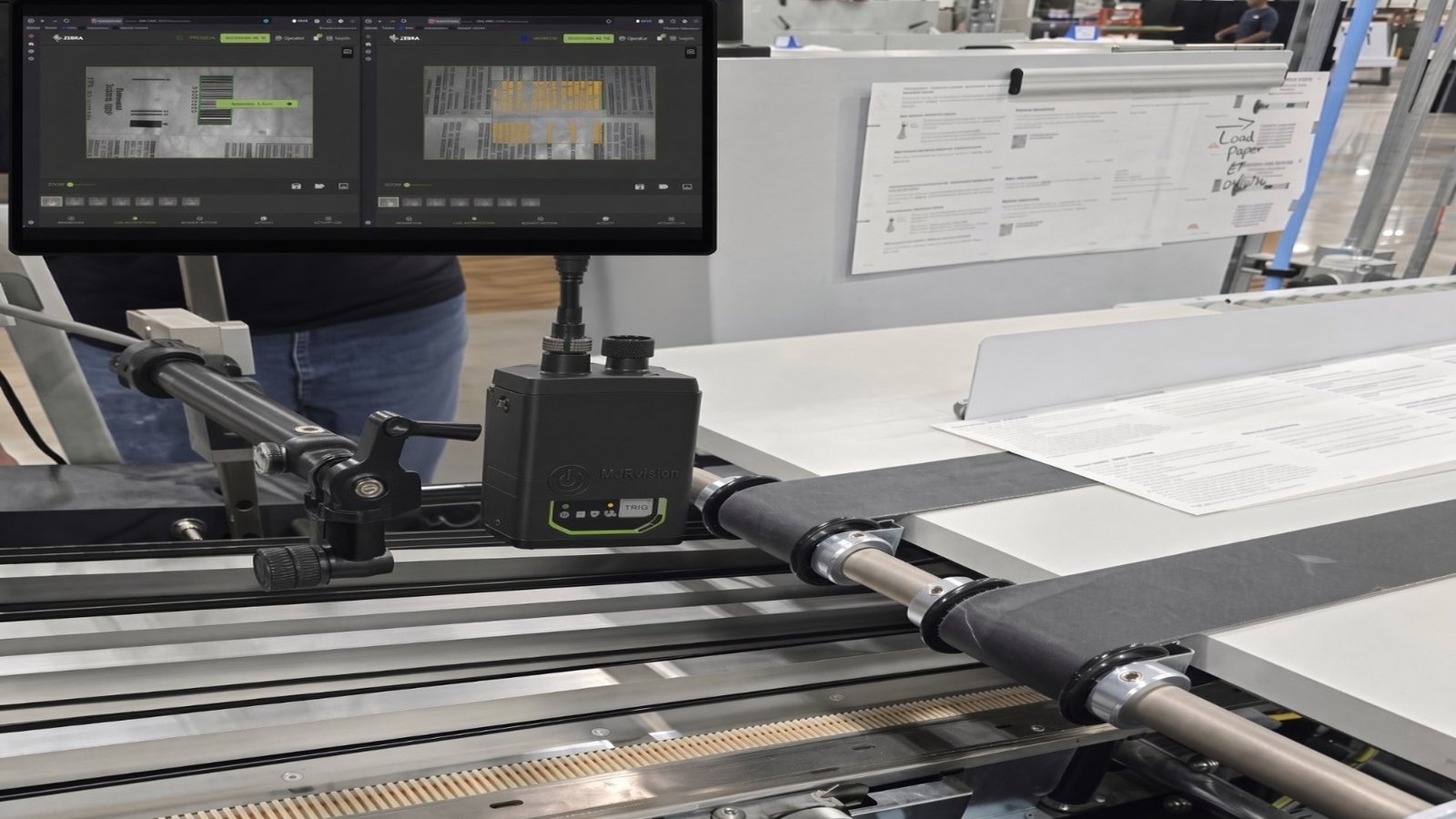
MJR Z-Camera System with dual live views on a PC-based touchscreen monitor. Zoom
Tier 01 · Highest capability

MJR Z-Camera System

A complete new MJR camera unit: barcode reading on one side and pixel-count-based print verification on the other, in a single unit. Job changeover between different jobs takes seconds — no long setup, unlike the competition. Live images are shown on a PC-based touchscreen monitor.

Best forHighest capability of the three tiers.
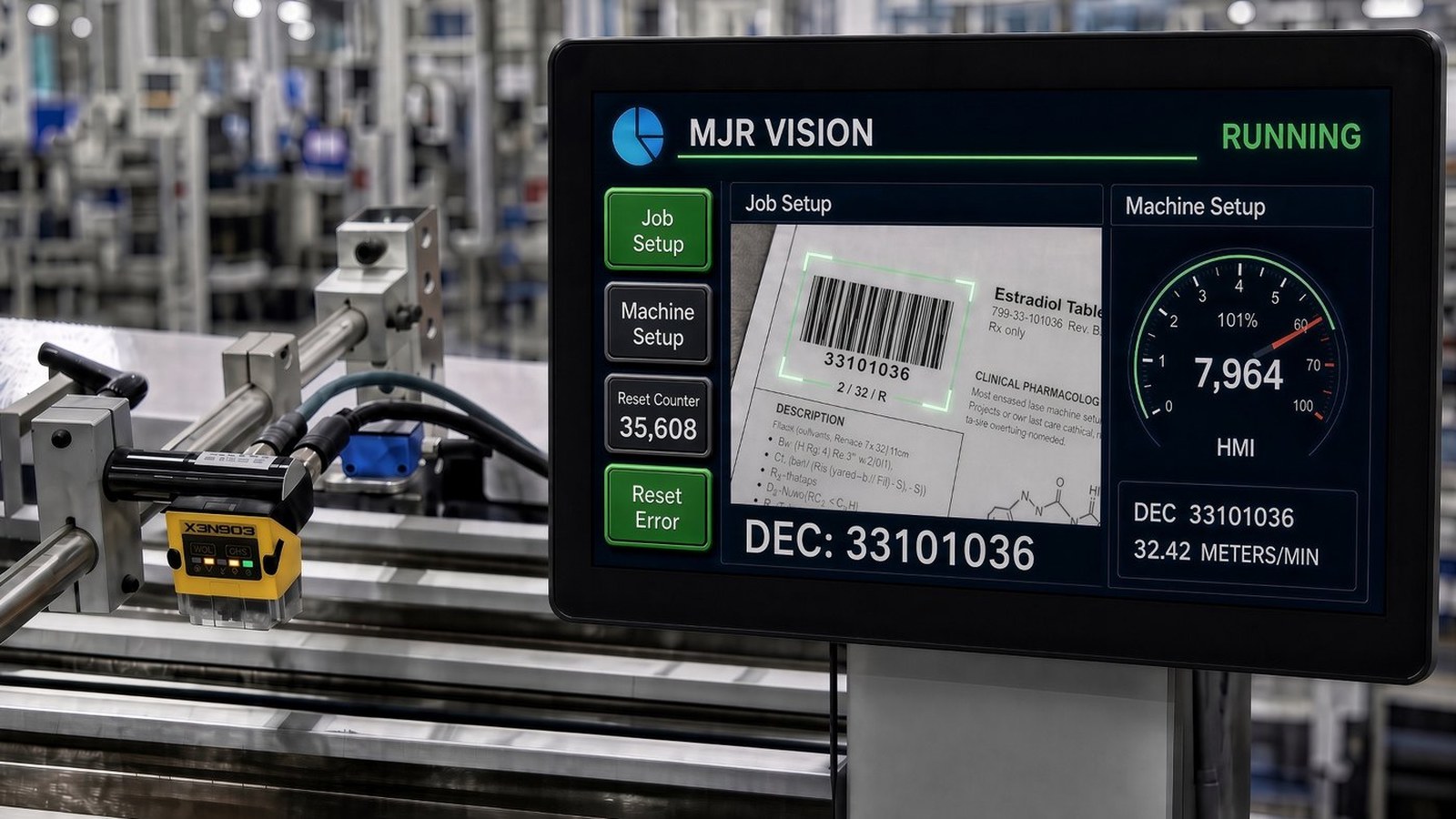
MJR K-Reader based system: PLC-driven HMI showing a live barcode image and job data. Zoom
Tier 02 · Best value

MJR K-Reader Based System

Keyence-based barcode readers paired with print-verification sensors, delivering reliable verification through a PLC-driven HMI that displays live images. Priced below the Z-Camera System.

Best forBest value, with live images on the HMI.

Cognex DM262Q reader running with an MJR HMI displaying a live pharma barcode read. Zoom
Tier 03 · Fastest, least expensive

Cognex Upgrade Retrofit

For sites already running Cognex barcode readers whose fiber-optic sensors cannot reliably detect print on one side or the other of the leaflet. MJR keeps your existing Cognex readers and replaces everything else with an MJR PLC/HMI enclosure that can display barcode images — images operators currently cannot see at all. Installs in one day.

Best forFastest, cheapest add-on for existing Cognex sites.

Production statistics

Know what every shift produced, and what it cost.

Production statistics work with all three tiers. The MJR HMI turns every read into numbers a supervisor can act on, and keeps a daily log you can look back on.

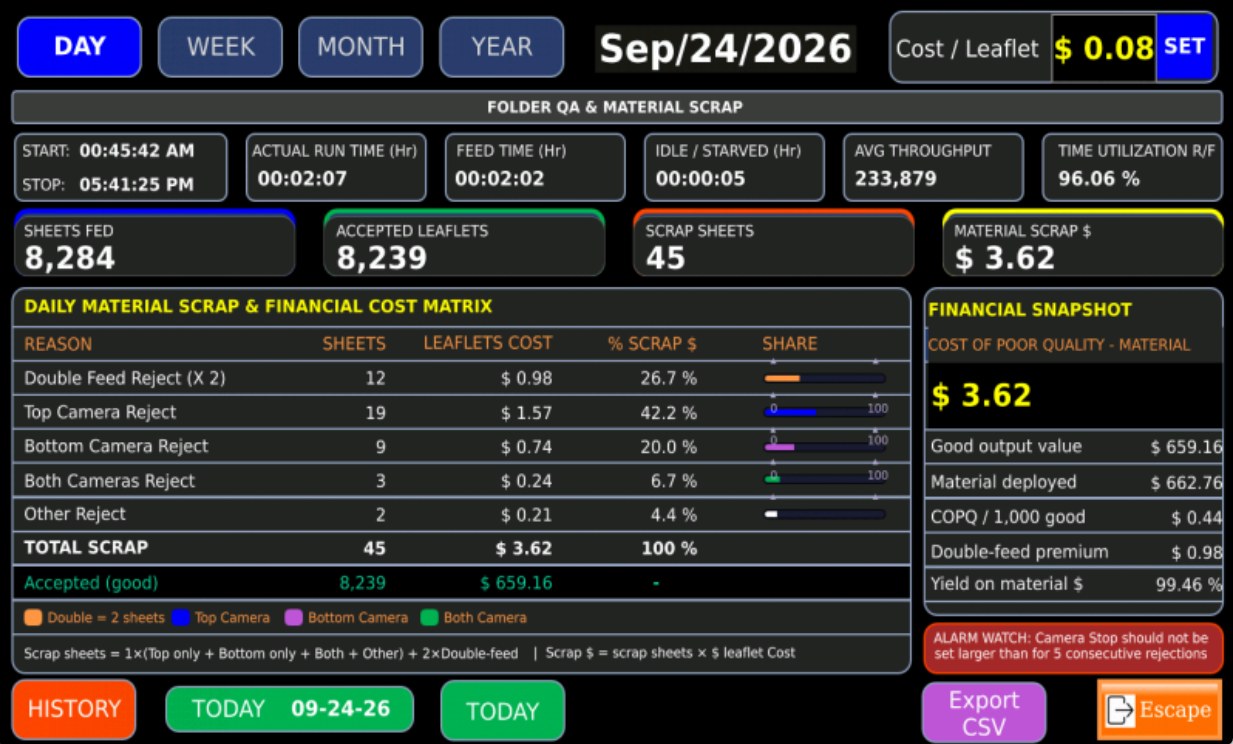
MJR HMI Day screen: sheets fed, accepted, scrap by reason, and the Financial Snapshot. Zoom
MJR HMI Day screen: sheets fed, accepted, scrap by reason, and the Financial Snapshot.
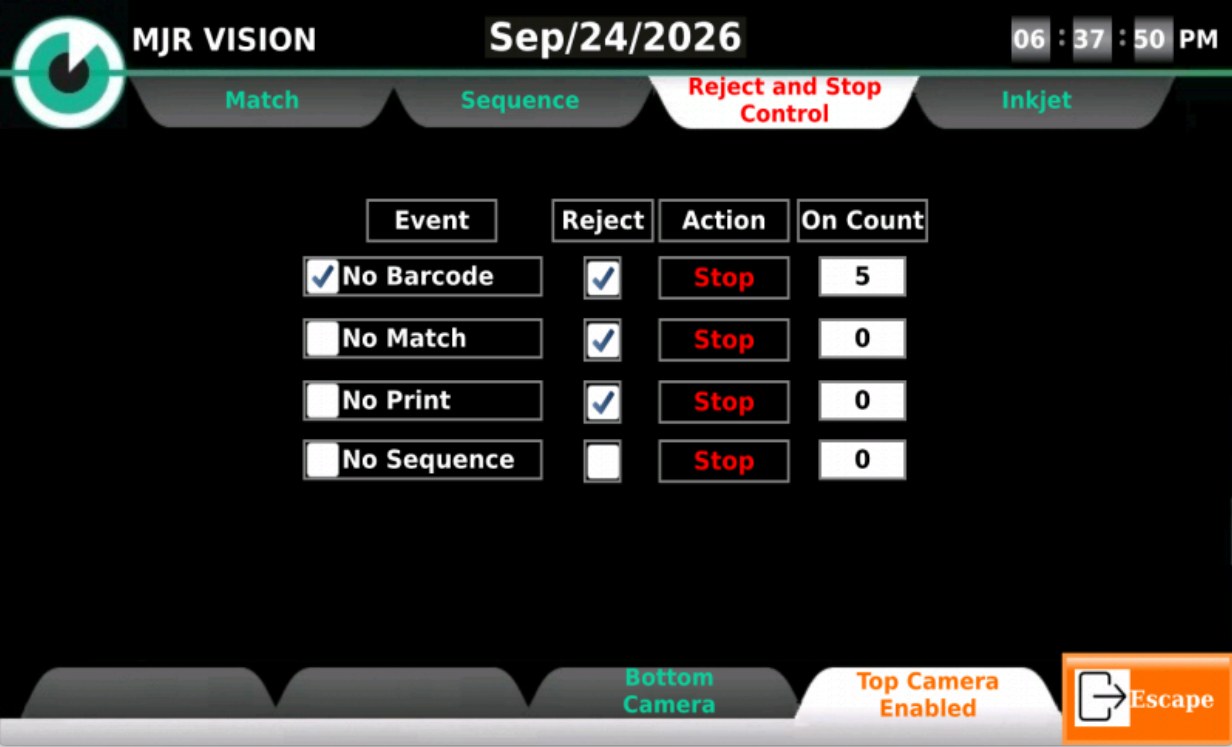
Reject and Stop Control: choose which events reject or stop the line, and after how many in a row. Zoom
Reject and Stop Control: choose which events reject or stop the line, and after how many in a row.
01

Counts

Sheets fed, accepted, scrap and double feeds, with rejects split into top, bottom and both sides.

02

Performance

Yield, run time, throughput and utilization for the shift.

03

Financial Snapshot

Cost of poor quality per 1,000 good leaflets, based on your cost per leaflet.

04

Daily history

Every day is saved to its own dated log. Pick a month and a date on the History screen to review it.

05

CSV export

One button sends today's log, or any day from History, to a PC as a CSV file.

06

Stop on consecutive rejects

Set how many rejects in a row stop the line, or set it to zero to never stop.

Not the same as

Retrofit, not a new line.

This product adds verification to a literature folder that is already installed and running. If you are specifying a complete outsert folding and inspection system — curing, fold inspection and barcode print verification together — that is a separate MJR product.

See the Pharmaceutical Literature Inspection System

Next step

Send us the make and model of your line.

We will tell you what can be retrofitted, what it takes, and how fast. Parts lead time runs from immediate to about two weeks; once parts are on hand, installs are typically completed in one day.